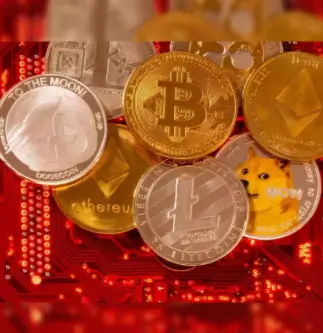

A decentralized money market uses smart contracts to automate lending, borrowing, and liquidity provision without traditional intermediaries. Collateral, algorithmic interest rates, and liquidity pools enforce terms and reduce default risk. Participants include borrowers, lenders, and liquidity providers, each interacting through transparent, auditable protocols. The approach offers programmable, market-driven finance with broader access and lower counterparty risk, but it also introduces new complexities and risk factors. Questions remain about resilience, governance, and long-term implications for finance.
What Is a Decentralized Money Market and Why It Matters
A decentralized money market is a financial system built on blockchain technology that allows users to lend and borrow assets without traditional intermediaries.
It enables permissionless participation, aligns incentives through transparent rules, and reduces counterparty risk via autonomy and open access.
It relies on decentralized governance and algorithmic pricing to adapt interest rates, margin calls, and risk assessments without centralized control.
Core Mechanisms: Smart Contracts, Collateral, and Liquidity
Smart contracts, collateral, and liquidity constitute the core mechanisms that enable decentralized money markets to operate without traditional intermediaries. In this framework, decentralized lending relies on programmable agreements that automatically enforce terms, manage risk, and settle repayments. Collateral mitigates default risk, while liquidity pools furnish continuous access to funds. The result is autonomous, transparent finance powered by smart contracts and open networks.
See also: How AI Is Used in Online Learning
Roles and Participation: Borrowers, Lenders, and Liquidity Providers
In decentralized money markets, participation is defined by three primary roles: borrowers, lenders, and liquidity providers.
The framework analyzes borrowers’ incentives and lenders’ risk, aligning capital through transparent terms and auditable protocols.
Liquidity providers sustain pools, balancing supply and demand while managing collateral dynamics and fungibility.
This architecture emphasizes autonomy, risk-aware decision-making, and market-driven price signals for efficient capital allocation.
Benefits, Risks, and What the Future Could Mean for Finance
What do the benefits, risks, and potential future implications of decentralized money markets mean for the broader financial landscape? They promise enhanced access, transparent pricing, and programmable contracts that reduce counterparty dependence. However, decentralized risk concentrates in platforms and protocols, demanding rigorous risk assessment. Interest compounding effects on yields matter, yet regulatory clarity and interoperability will determine sustainable adoption and long-term financial liberation.
Conclusion
A decentralized money market operates at the edge of traditional finance, where code governs trust and liquidity flows. Smart contracts enforce terms, collateral guards against risk, and pools sustain access to funds without intermediaries. Borrowers, lenders, and providers interact in open, permissionless ecosystems, driving variable, algorithmic rates. Yet, uncertainty lingers: governance, security, and systemic shocks test resilience. As technology and regulation evolve, the next move could redefine value, credit, and trust—quietly reshaping the financial landscape.